
ALKUOBOND
Blog
Learn The Art of Selecting Dark and Light ACP Sheets with Alkuobond
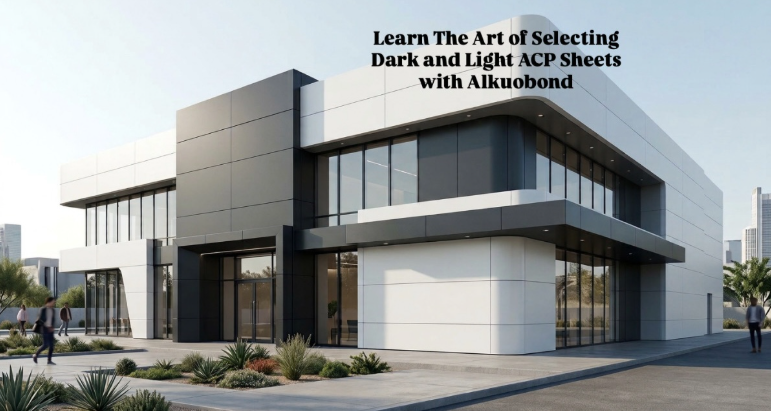
By now, this is the common understanding that every architectural surface tells a visual story long before anyone steps through the front door. The interplay between dark and light cladding dictates how a building converses with natural daylight, urban surroundings,and human emotion. Tone is not merely cosmetic; it defines volume, temperature, and prestige.
Aluminum Composite Panels (ACP) have rewritten the capabilities of contemporary architecture. They deliver lightweight structural resilience, crisp geometry, and unyielding weather protection. Yet, the true power of an aluminum composite panel system lies in color dynamics. Pairing deep, grounding dark shades with luminous light tones transforms flat surfaces into memorable urban landmarks.
Here is an Alkuobond guide on how to select, contrast, and integrate dark and light ACP sheet design across exterior facades, interior spaces, and corporate signage.
The Exterior Playbook: Contrast, Climate, and Presence
Selecting panels for exterior wall cladding requires balancing visual gravitas with environmental science. The facade must endure severe weather elements while asserting its visual presence within the cityscape. Our recent projects including the Alkhidmat Foundation exterior, Angeethi Restaurant, Supreme Foam, and United King exterior, demonstrate how seamlessly our ACP sheets perform on diverse architectures. We supply exactly what your project requires.
- Light ACP Tones (Radiance and Thermal Efficiency): Pure whites, metallic silvers, soft zinc, and warm bone ivory bounce sunlight away from the building envelope. Light shades significantly reduce urban heat absorption, maintaining cooler interior core temperatures in tropical or high-isolation climates. Visually, light-colored cladding expands spatial volume, helping mid-rise commercial builds and sprawling residential complexes feel expansive, clean, and welcoming to every visitor.
- Dark ACP Tones (Depth, Tension, and Distinction): Charcoal grey, deep bronze, midnight black, and rich slate absorb light, casting sharp architectural shadow-lines. Dark panels ground a building, accentuating dramatic cantilevers, window ribbons, structural columns,and entry portals. They convey permanence, authority, and modern visual sophistication.
The Winning Exterior Formula
- The 70/30 Rule: Clad 70% of the primary envelope in light ACP to optimize solar reflectance and visual scale. Frame structural breaks, recessed balconies, and vertical columns with 30% dark ACP panels to add dramatic shadow lines.
- Material Synergy: Pair dark metallic cladding with natural stone, floor-to-ceiling glass, or rich timber finishes to bridge industrial precision with organic warmth.
Interior Elegance: Mood, Scale, and Spatial Flow
Indoors, color guides foot traffic, establishes brand atmosphere, and defines functional boundaries within large floor plans.
- Spacious Light Interiors: Soft grey, champagne, brushed aluminum, and light wood-textured panels work wonders in grand lobbies, airport terminals, and open-plan corporate headquarters. They reflect ambient lighting across long spans,minimizing artificial lighting reliance and keeping high-traffic areas feeling open and invigorating.
- Dramatic Dark Feature Walls: High-gloss black, deep indigo, gunmetal, or dark concrete-finish panels create compelling focal points in boardrooms, reception backdrop walls, and executive suites. Dark walls isolate attention, drawing eyes directly toward brand logos, digital displays, or artistic elements.
- The Interior Harmony Formula: Avoid overwhelming compact rooms with floor-to-ceiling dark cladding. Instead, line acoustic feature walls,column wraps, or ceiling soffits with dark panels against light perimeter walls to draw visitors seamlessly inward while retaining an open ambience.
Corporate Signage is the Legibility That Commands Attention
A company’s exterior signage serves as its primary physical handshake. The visual contrast between dark and light ACP sheets determines round-the-clock legibility and brand perception.
- High-Contrast Lettering: Dark channel letters mounted over a light metallic ACP back-tray create razor-sharp readability under intense sunlight.
- Halo Illumination: Dark ACP backdrops with router-cut light panel inserts create a subtle halo lighting effect for striking night visibility.
- Weather Resistance: Utilizing high-grade fire retardant ACP ensures signage fascia remains flat,weather-resistant, and vibrant through years of direct UV exposure and wind pressure.
Alkuobond Explains Why Specification Matters
Color selection creates the initial vision, but rigorous material specification ensures that vision remains untarnished over decades. Alkuobond 3mm and 4mm ACP sheets unite precision coating, flat planarity, and advanced core engineering. Certified with high-grade PVDF finishes, Alkuobond panels resist chalking, blistering, and color degradation under severe atmospheric weathering.
Whether engineering high-rise exterior envelopes or crafting bespoke interior architecture, specifying Alkuobond panels delivers structural integrity, safety compliance, and timeless visual contrast.
Get free consultation by calling now:
- Email: contact@alkuobond.com
- Website: www.alkuobond.com
- Call/WA: 0331-2411516
Frequently Asked Questions (FAQ)
Q1: Should I choose dark or light ACP sheets for high-temperature climates?
Light ACP sheets are ideal for exterior facades in hot regions because they reflect solar radiation, keeping internal building temperatures lower. Dark ACP sheets absorb more heat, so when used externally, they work best as accent panels rather than full building cladding.
Q2: How do Alkuobond ACP sheets maintain their color performance over time?
Alkuobond panels use advanced PVDF (Fluorocarbon) surface coatings. This protective layer protects against UV breakdown, chemical atmospheric pollution, and color fading, ensuring both dark and light panels retain their original gloss and hue.
Q3: Can dark ACP panels make interior spaces look smaller?
If used on all four walls of a small room, dark panels can absorb light and shrink perceived space. However,when applied strategically as an accent wall or paired with light ceiling and perimeter panels, dark Alkuobond sheets create luxury, depth, and focused elegance.
Q4: Are Alkuobond panels suitable for architectural signage and corporate identity?
Yes. Alkuobond panels provide high-flatness surfaces that are easy to cut, route, and shape. They provide excellent background stability for modern illuminated channel lettering and exterior corporate signage.
Q5: Are Alkuobond ACP sheets fire-retardant for high-rise exterior cladding?
Alkuobond offers certified fire retardant ACP core configurations designed to meet international building safety codes. These panels prevent flame propagation and smoke density, making them suitable for commercial high-rises and public institutions.

TAGS
- ACP Panels
- ACP panels UAE Dubai Abu Dhabi
- Aluminium Composite Panels
- Exterior Cladding
- Facade Design
- acp panel thickness 3mm 4mm
- aluminium composite panels supplier Pakistan
- aluminium facade panels price in Pakistan
- architectural design trends 2026
- best facade material for commercial buildings
- fire retardant acp
- fire safety building materials,